Key Takeaways

How to Become a Firefighter in San Diego
Learn how to become a firefighter in San Diego with a clear regional roadmap covering EMT requirements, paramedic advantages, CPAT preparation, fire academy options, hiring steps, probation expectations, and the local wildfire/WUI realities that shape Southern California fire service careers.
How to Become a Firefighter in San Diego: A Regional Career Guide

Becoming a firefighter in San Diego takes more than meeting minimum requirements. The region includes city departments, county systems, fire academies, EMS pathways, wildland-urban interface risk, and highly competitive paramedic-preferred hiring tracks. This guide gives you the regional roadmap first, then points you toward deeper pages as they are built.
 Key Takeaways
- Most San Diego-area firefighter candidates need to be at least 18 years old, hold a high school diploma or GED, have a valid California driver’s license, and hold EMT certification.
- A California Paramedic license is one of the strongest hiring advantages in the San Diego region, especially for agencies that staff ALS transport or medic engines.
- San Diego Fire-Rescue requires hired recruits to complete its internal academy, even if they already graduated from an outside fire academy.
- San Diego County candidates must understand the difference between state paramedic licensure and local San Diego County paramedic accreditation.
- The CPAT is the dominant physical testing standard in the region, but candidates should always verify each agency’s current hiring announcement.
- Wildland-urban interface risk, Santa Ana winds, canyon fires, and mutual aid deployments make San Diego different from many urban-only fire systems.
- Probation usually lasts 12 months and tests work ethic, humility, station culture, street knowledge, and daily consistency.
San Diego Firefighter Quick Facts
| Category | Typical San Diego Region Expectation |
|---|---|
| Minimum age | Usually 18 years old |
| Education | High school diploma or GED |
| Driver license | Valid California Class C driver’s license commonly required |
| Medical certification | EMT minimum for many entry tracks; paramedic strongly preferred or required by several agencies |
| Physical test | CPAT is common, but agency announcements must be verified |
| Academy pathway | Internal department academy, sponsored academy, or community college Firefighter I academy depending on agency |
| Probation | Often 12 months after academy or appointment |
| Regional reality | EMS-heavy, competitive, WUI-exposed, and strongly influenced by paramedic staffing needs |
How to Become a Firefighter in San Diego: Step-by-Step
1. Meet the basic requirements
Start with the fundamentals: age, education, driver’s license, clean documentation, and eligibility to work in a public safety role. Most departments expect candidates to be at least 18 years old, possess a high school diploma or GED, and hold a valid California driver’s license.
2. Earn EMT certification
EMT certification is the baseline medical credential for most fire service hiring pathways. San Diego-area departments respond to a large number of medical calls, so EMS readiness is not a side issue. It is part of the job.
Start with the National Registry of Emergency Medical Technicians and confirm local requirements through the County of San Diego EMS office.
3. Consider paramedic school
A California Paramedic license can significantly increase competitiveness in the San Diego region. Some agencies hire only Firefighter/Paramedics for entry-level suppression roles, while others accept EMT candidates but strongly prefer paramedics.
4. Prepare for CPAT or agency physical testing
The Candidate Physical Ability Test, or CPAT, is widely used in the San Diego region. Candidates should train specifically for firefighter tasks, not just general fitness. Stair climbing, grip endurance, loaded carries, hose drags, and victim drags must be practiced under fatigue.
Learn more from the Firefighter Candidate Testing Center.
5. Choose your academy strategy
Some candidates attend a community college Firefighter I academy before applying. Others are hired first and then sent through a department academy. San Diego Fire-Rescue requires recruits to complete its own internal academy regardless of outside academy completion.
6. Apply during the correct hiring window
Hiring windows may be short. Missing one application period can delay your process by months or even years. Monitor official city, county, college, and department pages rather than relying only on job boards.
7. Pass the written exam, oral board, background, and medical screening
The hiring process commonly includes a written exam, oral board interview, background investigation, medical evaluation, drug screening, and final appointment review. Candidates should prepare for the entire process, not just the application.
8. Complete academy and probation
Getting hired is not the finish line. Probation is where the department evaluates your daily habits, humility, work ethic, station fit, learning ability, and readiness to become a trusted crew member.
Major Fire Agencies in the San Diego Region
San Diego is not one hiring system. Candidates may apply to municipal fire departments, joint powers authorities, state agencies, and nearby regional departments. Each agency has its own process, culture, EMS model, and hiring priorities.
| Agency | General Hiring Pattern | EMS Emphasis | Regional Reality |
|---|---|---|---|
| San Diego Fire-Rescue Department | Fire Recruit process through the City of San Diego | EMT minimum; paramedic highly desirable | Large urban agency with canyon, EMS, HazMat, and WUI exposure |
| Chula Vista Fire Department | Municipal hiring and sponsored academy pathways | Paramedic strongly preferred | Suburban growth, ALS response, and open-space brush exposure |
| Oceanside Fire Department | Firefighter/Paramedic-focused hiring | Paramedic required for many entry tracks | North County coastal, riverbed, and mutual aid exposure |
| Escondido Fire Department | FCTC-linked hiring and Firefighter/Paramedic pathway | Paramedic emphasized | Interior valley WUI risk, ALS transport, and steep terrain exposure |
| Carlsbad Fire Department | Competitive municipal Firefighter/Paramedic hiring | Paramedic required for suppression ranks | Coastal, suburban, canyon, and specialty team opportunities |
| National City Fire Department | Recruit academy and entry-level municipal process | EMT minimum; paramedic desirable | Urban, industrial, maritime, and mutual aid exposure |
| Coronado Fire Department | Smaller municipal process | Paramedic commonly expected | Marine, bay, military, and coastal hazards |
| Heartland Fire & Rescue | JPA system serving El Cajon, La Mesa, and Lemon Grove | EMT minimum for reserve; paramedic preferred for career | East County urban response and foothill WUI exposure |
| CAL FIRE San Diego Unit | CalCareers seasonal and permanent hiring systems | EMT, paramedic, and wildland credentials vary by classification | Major wildland, mountain, desert, and mutual aid operations |
San Diego Fire Academy Options
Candidates who are not hired directly into a department academy often look to regional community college academies. These programs can help candidates earn Firefighter I training, build discipline, and improve competitiveness. Requirements, costs, schedules, and prerequisites change, so always verify directly with the school.
| Academy | General Schedule | Key Notes | Official Link |
|---|---|---|---|
| San Diego Miramar College Fire Academy | Semester-based cohort model | Known for structured public safety training; verify current FACD and prerequisite requirements | Miramar Fire Technology |
| Palomar College Fire Academy | Semester-based academy | North County option with competitive entry requirements and published cost structure | Palomar Fire Technology |
| Southwestern College Fire Science Technology | Modular and sponsored academy pathways | South County option with EMT and fire science pathways; Chula Vista sponsored academy connection | Southwestern Fire Science |
| Department Internal Academies | Varies by hiring agency | SDFD, National City, Chula Vista-sponsored recruits, and others may use internal or sponsored academies | Verify with each hiring agency |
Future detailed guide: San Diego Fire Academy Requirements, Costs, and Schedules
EMT and Paramedic Pathways in San Diego
EMS is one of the most important parts of the San Diego firefighter pathway. Many new candidates underestimate how heavily EMS credentials influence hiring. EMT may get you eligible. Paramedic can make you much more competitive.
EMT vs. Paramedic vs. County Accreditation
| Credential | What It Means | Why It Matters |
|---|---|---|
| EMT Certification | Entry-level emergency medical certification | Common minimum requirement for firefighter candidates |
| California Paramedic License | State-level paramedic license | Highly valuable for ALS departments and Firefighter/Paramedic roles |
| San Diego County Paramedic Accreditation | Local approval to practice paramedicine under San Diego County protocols | Required before working as a paramedic in the local EMS system |
Future detailed guide: San Diego County Paramedic Accreditation Guide
CPAT and Physical Testing in San Diego
Most San Diego-area candidates should prepare for the CPAT, but they should still read each job announcement carefully. Physical testing standards can vary by agency, academy, or hiring period.
| Test | Common Region | Events | Time Standard |
|---|---|---|---|
| CPAT | Common in San Diego and many California agencies | 8 continuous firefighter task events | 10 minutes, 20 seconds |
| Biddle / BPAT | More common in parts of Los Angeles region | 11 firefighting task events | 9 minutes, 34 seconds |
Captain Dave’s Pro Tip
Do not train for the CPAT like it is a normal gym workout. Train for controlled work under fatigue. The stair climb, hose drag, equipment carry, forcible entry, and rescue drag test your ability to keep moving when your legs, lungs, grip, and judgment are all being challenged.
Future detailed guide: CPAT San Diego Guide: Events, Training, and Common Mistakes
San Diego Firefighter Salary and Lifestyle Reality
Firefighter salary pages often show only base pay. That can be misleading. Real firefighter compensation may include FLSA overtime, paramedic incentives, education pay, bilingual pay, specialty team pay, and mandatory overtime. At the same time, San Diego has a high cost of living, so candidates should think about pay and lifestyle together.
| Compensation Factor | Why It Matters |
|---|---|
| Base salary | The posted range before overtime and incentives |
| Paramedic differential | Can significantly increase earning potential in ALS systems |
| Overtime | May be substantial due to staffing needs, wildfire deployments, and FLSA schedules |
| Specialty pay | May apply for HazMat, USAR, dive rescue, bilingual skills, or other assignments |
| Cost of living | San Diego housing costs may require long commutes or inland residence choices |
Future detailed guide: San Diego Firefighter Salary: Base Pay, Overtime, and Cost of Living
San Diego Firefighter Schedules
A firefighter schedule shapes family life, sleep, recovery, commuting, and long-term health. Many San Diego-area agencies use or have moved toward 48/96 schedules, while other agencies may use 24-hour Kelly-style schedules.
| Schedule | How It Works | Strength | Challenge |
|---|---|---|---|
| 48/96 | 48 hours on duty followed by 96 hours off duty | Fewer commutes and longer recovery blocks | Can be exhausting in high-call-volume stations |
| Kelly-style 24-hour schedule | Rotating 24-hour shifts with scheduled Kelly days | Limits continuous on-duty time | More frequent commutes and fragmented off-duty time |
Captain Dave’s Reality Check
A firefighter schedule looks attractive from the outside, but the work is not just “days off.” Those off-duty days often include recovery from sleep loss, family responsibilities, training, overtime, commuting, and preparation for the next shift.
Future detailed guide: San Diego Firefighter Schedule: 48/96, Kelly Days, Fatigue, and Family Life
Probation and Station Culture
Probation is where a new firefighter earns trust. Technical skill matters, but so do attitude, punctuality, humility, cleaning habits, map study, communication, and how a rookie responds to correction.
| Respected Probationary Firefighter | Struggling Probationary Firefighter |
|---|---|
| Arrives 30 to 45 minutes early | Arrives right at shift change |
| Checks gear, tools, apparatus, and assignments without being asked | Waits for someone else to give direction |
| Listens more than they talk | Explains, argues, or makes excuses |
| Studies streets, hydrants, protocols, and station expectations | Only studies when a test or evaluation is coming |
| Handles chores, dishes, cleaning, and kitchen work with pride | Treats station work as beneath them |
Captain Dave’s Pro Tip
Probation is not the time to prove how much you know. It is the time to prove how well you learn, how hard you work, and how reliably you can be trusted when nobody is clapping for you.
For deeper study, see Firefighter Probation Survival Guide.
Wildland and WUI Realities in San Diego
San Diego firefighters must be ready for more than structure fires and medical calls. The region includes urban canyons, coastal sage scrub, foothills, open space, mountains, desert transition zones, and Santa Ana wind-driven fire behavior.
| Regional Hazard | Why It Matters to Candidates |
|---|---|
| Santa Ana winds | Can drive rapid, dangerous fire spread during extremely dry conditions |
| Urban canyons | Create access, evacuation, and fire behavior challenges inside populated areas |
| Wildland-urban interface | Requires firefighters to understand both structure protection and wildland tactics |
| Mutual aid | San Diego agencies may operate with CAL FIRE, Cal OES, federal partners, and regional strike teams |
Candidates interested in wildland readiness should become familiar with NWCG concepts and the CAL FIRE hiring system.
Common San Diego Firefighter Candidate Misconceptions
Misconception 1: Any fire academy gets me into San Diego Fire-Rescue
Not necessarily. San Diego Fire-Rescue requires hired recruits to complete its internal academy. Outside academy completion may help your preparation, but it does not automatically place you into SDFD’s Firefighter I rank.
Misconception 2: A California Paramedic license means I can work anywhere in San Diego County immediately
A state paramedic license is not the same as San Diego County paramedic accreditation. Local accreditation is required before practicing as a paramedic under county protocols.
Misconception 3: General fitness is enough for CPAT
General fitness helps, but firefighter physical testing is task-specific. Train with weighted stair work, carries, drags, grip endurance, and controlled breathing under fatigue.
Misconception 4: Salary is easy to understand from one online number
Firefighter compensation may include overtime, FLSA pay, specialty pay, paramedic incentives, and education pay. At the same time, San Diego’s cost of living must be considered.
Helpful Official Resources
Frequently Asked Questions
What are the basic requirements to become a firefighter in San Diego?
Most San Diego-area firefighter candidates need to be at least 18 years old, have a high school diploma or GED, hold a valid California driver’s license, and possess EMT certification. Some departments require or strongly prefer a California Paramedic license.
Do I need to be a paramedic to become a firefighter in San Diego?
Not always, but being a paramedic is a major advantage. Some San Diego-area agencies hire EMT candidates, while others focus heavily on Firefighter/Paramedic positions.
Does San Diego Fire-Rescue accept outside fire academy graduates?
Outside academy completion may strengthen your preparation, but San Diego Fire-Rescue requires hired recruits to complete its own internal Basic Fire Academy.
What is the CPAT?
The Candidate Physical Ability Test, or CPAT, is a standardized firefighter physical ability test made up of eight continuous job-related events. The time limit is 10 minutes and 20 seconds.
How long does it take to become a firefighter in San Diego?
A realistic timeline is often 2 to 5 years, depending on EMT completion, paramedic school, academy availability, hiring windows, CPAT readiness, and background preparation.
What is the hardest part of becoming a firefighter in San Diego?
The hardest part is usually not one single test. It is staying consistent through EMT, CPAT, academy preparation, applications, oral boards, background checks, medical screening, and probation.
Next Step
If you are serious about entering the fire service, build your plan before the next hiring announcement opens. Start with EMT, prepare for CPAT, study the agencies you want to work for, and learn how probation actually works before you are wearing the badge.
For deeper preparation, see Become a Firefighter, Firefighter Probation Survival Guide, and Military to Firefighter.
Share:

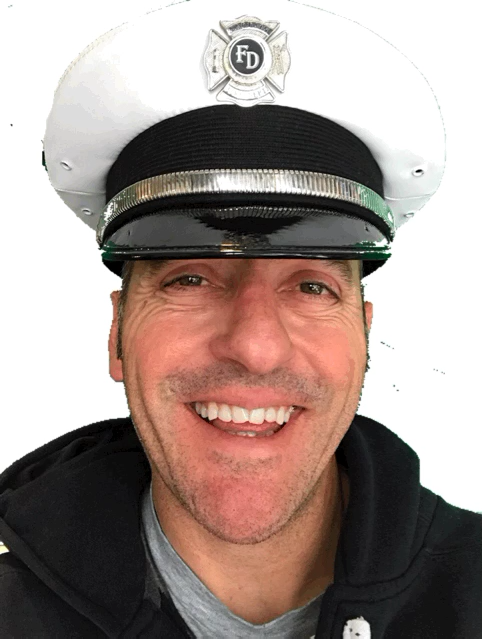
About the Author
Captain Dave is a retired Fire Captain, former paramedic, and author dedicated to mentoring the next generation of firefighters. With more than two decades of fire service experience, he has led crews through high-pressure incidents, trained probationary firefighters, and prepared candidates for every stage of the hiring and promotion process.
He is the author of multiple career guides including Become a Firefighter – National Updated Edition, Pass Firefighter Probation, Veteran to Firefighter, High School to Firefighter, and Promote to Engineer. Captain Dave also creates online courses and interactive safety books for children, blending real-world experience with a passion for public safety education.
When he’s not writing or teaching, Captain Dave shares insights through his Firefighter Mentor platform, helping aspiring and advancing firefighters build the skills, mindset, and confidence needed to thrive in the fire service.
Learn more at www.firefightermentor.com.
Blog posts
-

Who Is Captain Dave
Who is Captain Dave? Learn how retired fire captain and mentor Captain Dave helps future firefighters, probationary firefighters, and first responders build successful careers through books, training, and real-world fire service experience.
-

CALIFORNIA FIRE UPDATES
Latest California wildfire updates featuring active fires, containment levels, acreage burned, incident summaries, and official CAL FIRE information statewide.
-

What Happens After a Conditional Firefighter Job Offer? What is Firefighter Probation?
 A conditional firefighter job offer is a major milestone, but it is not the finish line. Learn what usually happens next, including medical exams, background review, onboarding, academy preparation, first-shift readiness, and why firefighter probation becomes the next real test of habits, humility, crew trust, and long-term success.


