
How Do I Become a Firefighter in California-2026
Master the 2026 firefighter recruitment gauntlet. Meet strict baseline age, EMT, and physical agility testing metrics, navigate internal fire academy training pipelines, and clear department background investigations with this comprehensive, step-by-step career guide from Captain Dave.
How to Become a Firefighter in California: The Definitive Career Guide
Earning a fire service badge in California requires navigating a highly fragmented, intensely competitive civil service system. From understanding Cal-JAC testing frameworks to surviving rigorous municipal recruit academies, serious applicants must deploy a precise tactical plan. This master guide outlines the exact timeline you must follow to clear the physical gatekeepers, pass background investigations, and survive probation in the golden state.
California Fire Hire: Core Prerequisites
- Baseline Age & Education: Must be at least 18 years old with a valid high school diploma or GED equivalent.
- EMS Credentials: A valid NREMT or California State EMT certification is the baseline standard; an active Paramedic license provides a dominant competitive advantage.
- Physical Performance: Passing verification of either the 8-event Candidate Physical Ability Test (CPAT) or the 11-event Biddle Agility Test (BPAT).
- Core Application Portal: Registration on the Firefighter Candidate Testing Center (FCTC) Statewide Eligibility List (SEL) or National Testing Network (NTN).
California Regional Testing Parameters
| Target Region / Agency | Physical Agility Requirement | Minimum EMS Prerequisite | Primary Testing Portal |
|---|---|---|---|
| Sacramento (City & Metro) | CPAT Accepted | EMT Basic (Paramedic Preferred) | FCTC Statewide Eligibility List |
| Los Angeles (LAFD) | BPAT (Biddle) Mandatory | EMT License Required | City Selection Portal / FCA Exam |
| San Diego (City) | CPAT Accepted | EMT or SD County Paramedic | City Civil Service Hub |
| Cal Fire (Statewide) | Cal Fire Public Safety Standard | Public Safety First Aid / EMT | CalCareers / Seasonal Tier Classification |
 1 · Verify California's Basic Civil Service Requirements
Before allocating resources to advanced structural training programs, you must satisfy basic California civil service codes. Statutes mandate applicants be at least 18 years old at the time of official application (21 for specific county safety classes), hold a verified high school diploma or state GED equivalent, and carry a valid, unrestricted California Class C driver's license. Background investigators will thoroughly audit your complete DMV driving transcript, financial credit history, and any prior legal record—transparency from day one is mandatory.

2 · Complete EMT Certification and Pass Physical Agility Testing
Modern California emergency service is fundamentally anchored in Emergency Medical Services (EMS), with medical dispatches accounting for 70% to 80% of total regional call volumes. Consequently, the vast majority of municipal houses mandate a valid National Registry (NREMT) or California State EMT certification as an absolute condition of application. Candidates must finish a state-approved clinical curriculum, pass the NREMT cognitive exam, and secure local county accreditation protocols depending on their destination district.
Simultaneously, you must conquer physical agility gatekeepers. The dominant national metric is the 8-event Candidate Physical Ability Test (CPAT), executed locally under a strict 10-minute, 20-second time standard. However, structural regional variances exist: iconic powerhouse networks like the Los Angeles Fire Department (LAFD) require the 11-event Biddle Physical Agility Test (BPAT), featuring heavy roof ventilation simulations and industrial hose deployments.

3 · Graduate From an Accredited Fire Academy
The entry pathway across California splits into two clear operational models. Major metropolitan agencies run independent, closed internal recruit academies, where you are paid as a full-time employee to complete training customized to their municipal footprint. Conversely, many smaller fire protection districts or wildland agencies require you to complete an accredited regional community college Firefighter I academy out-of-pocket before applying. Prepare for 12 to 20 weeks of intensive daily physical conditioning, advanced manipulative drill-ground evolutions, high-angle technical rope rescues, and structural live-burn tasks.

4 · Secure FCTC Placement and Master the Oral Board Interview
To get hired by over 170 participating fire departments across California, candidates must land a spot on the active FCTC Statewide Eligibility List (SEL). This requires passing a standardized written exam covering mechanical aptitude, situational judgment, and reading comprehension. Your application package must present a clean, concise resume alongside verified proof of your certifications.
The single highest point of competitive failure is the multi-officer Oral Board Interview. Panel captains easily spot and disqualify candidates who recite generic, rehearsed answers. They are hunting for maturity, operational humility, and genuine coachability. To build a storytelling framework that clears this panel, utilize our comprehensive Become a Firefighter Interactive Curriculum.
5 · Clear PHQ Background Checks, Medical Audits, and Probation
Earning a conditional offer of employment initiates an intensive background screening process. Investigators use exhaustive Personal History Questionnaires (PHQ) and polygraph tests to look for gaps or deception. Furthermore, a department physician will verify your physical fitness using strict NFPA 1582 medical standards, assessing respiratory volumes, vision profiles, and cardiovascular metrics under stress.
Passing your background check and getting hired simply grants you access to the true testing ground: the probationary year. Lasting 6 to 12 months, probation evaluates your daily station work ethic, tool maintenance discipline, layout accuracy, map memorization, and your ability to take correction from senior engineers without getting defensive.
Build Your California Preparation Plan Safely
Stop burning years guessing at changing civil service codes, failing task-specific conditioning gates, or reciting rehearsed answers to interview panels. Secure Captain Dave's complete tactical training manuals to build a defensible competitive edge:
Helpful Authority Resources
- National Fire Protection Association (NFPA) – Official occupational safety codes, wellness directives, and industry analytics.
- Become a Firefighter Academy Platform – Live weekly mentoring cohorts, technical study frameworks, and direct officer coaching.
Frequently Asked Questions
How long does the California firefighter hiring journey realistically take?
The complete timeline commonly spans 12 to 24 months. This duration depends heavily on regional civil service hiring windows, background check bottlenecks, and local fire academy enrollment cycles.
Is a formal college degree required to get hired in California?
No, a formal college degree is not a mandatory prerequisite for most departments. However, earning an Associate's Degree in Fire Science or holding a valid Paramedic license awards substantial bonus points on competitive civil service ranking matrices.
What is considered the highest-friction event during California physical testing?
The 3-minute mechanical stair climb event during the CPAT (executed under a 75 lb total load) causes rapid metabolic failure for unprepared candidates. Aspiring firefighters should prioritize task-specific conditioning using an intentional, steady pace rather than sprinting early.
Share:

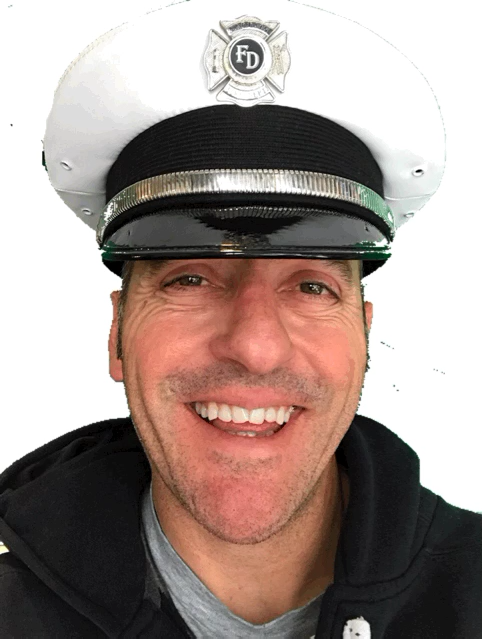
About the Author
Captain Dave is a retired Fire Captain, former paramedic, and author dedicated to mentoring the next generation of firefighters. With more than two decades of fire service experience, he has led crews through high-pressure incidents, trained probationary firefighters, and prepared candidates for every stage of the hiring and promotion process.
He is the author of multiple career guides including Become a Firefighter – National Updated Edition, Pass Firefighter Probation, Veteran to Firefighter, High School to Firefighter, and Promote to Engineer. Captain Dave also creates online courses and interactive safety books for children, blending real-world experience with a passion for public safety education.
When he’s not writing or teaching, Captain Dave shares insights through his Firefighter Mentor platform, helping aspiring and advancing firefighters build the skills, mindset, and confidence needed to thrive in the fire service.
Learn more at www.firefightermentor.com.
Blog posts
-

Who Is Captain Dave
Who is Captain Dave? Learn how retired fire captain and mentor Captain Dave helps future firefighters, probationary firefighters, and first responders build successful careers through books, training, and real-world fire service experience.
-

CALIFORNIA FIRE UPDATES
Latest California wildfire updates featuring active fires, containment levels, acreage burned, incident summaries, and official CAL FIRE information statewide.
-

What Happens After a Conditional Firefighter Job Offer? What is Firefighter Probation?
 A conditional firefighter job offer is a major milestone, but it is not the finish line. Learn what usually happens next, including medical exams, background review, onboarding, academy preparation, first-shift readiness, and why firefighter probation becomes the next real test of habits, humility, crew trust, and long-term success.


